

The Copper-Gold-Zinc Bisha Mine in Central Eritrea, N.E. Africa had its second Progradex PGX1350R Sampling System commissioned this month on a Schramm T450WD (wheel mounted) RC drilling rig. This system will support their other Schramm T450GT (track mounted) rig which has been performing RC Grade Control operations with a PGX1350R Sampler for the past year.
 Progradex
Progradex EL850 Entry Level Sampler

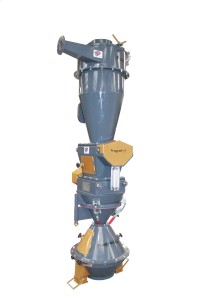
As announced this week, Progradex has released a new sampling system to the market for 2016. It is a nod to the now well established Cone Splitter sampling system designs pioneered by Progradex Managing Director, Toby Day, in the late 1990’s but with some modern day enhancements and improvements.
The EL850 product has been introduced to fill a technology gap in the market between the very basic cyclone/riffle splitter arrangements and the most technologically advanced Progradex PGX Series sampling systems. It is a fully automatic, gravity fed, mass market product that provides consistent quality sampling at affordable prices.
Though it is described it as an “entry level sampler” the EL850 packs a powerful punch.
Progradex Founder and Managing Director, Toby Day, comments, “Providing definable standards is critical for any industry. They are the boundary limits to work within. While we believe we have the ultimate drill sampling product in the premium PGX Series samplers, and the market results from an ever growing and diverse mineral drilling database backs that claim to be true, what is lacking behind it is an affordable, general purpose sampler for the mass market that can, at the very least, offer definable and consistent results.
It has been 17 years since I designed the world’s first cone splitter while working for Metal Craft in Perth and 18 years since the first automatic sampling system was made. Since then I have focussed on continuous innovation and improvement in this field because the boundaries of RC Drilling had not been realised. That approach produced some cutting edge products of their time, from the original cone splitter to the UDR sampling system (now owned by Sandvik) and, of course, now our latest Progradex PGX Series samplers but, in that time, those earlier product designs have been copied and some of the design principles that make them work properly have been lost. I believe they still have a place in the market today and am bringing them back with basic design principles and some modern day enhancements to improve them further but, most of all, we’re putting consistency into the market. Anything other than consistency is bad for the name of RC Drilling. We may have the best samplers in the world in the PGX Series but without a supporting product like the EL850, we are failing to protect and define RC sampling generally.”
Conceptually, the EL850 is traditional in its make-up – A cyclone and collection/dump box feeding into an adjustable cone splitter. There are however significant design differences between this product and anything else on the market past or present. So, what exactly is different?
HE Cyclone
The cyclone itself has been lifted directly from Progradex’s premium PGX Series sampler product-line due to its super-compact design and high collection efficiency, wear resistance and blockage resistance. The long, tapered inlet transition from the sampling hose is flow-balanced to minimise dead zones that cause hang-up and is manufactured from hardened wear plate. This leads into a fully alumina ceramic lined inlet scroll which produces a very high velocity, centrifugal vortex for unrivalled collection efficiency and the barrel and discharge cone below is fully polyurethane lined to resist blockage, hang-up and cross contamination. It has a low-profile outlet volute to minimise system pressure drop and height and the cyclone lid hinges open assisted by a special heavy duty gas strut to overcome potential injuries associated with powered devices and is mechanically lockable in the open position for fail-safe maintenance.
Collection/Dump Box
The fully automatic Collection/Dump Box is a triumph in compact design without compromising storage capacity. Featuring twin, centrally dumping, Linatex rubber lined gates that seal on machined frame inserts, the double-dump gates are automatically actuated by heavy duty pneumatic cylinders in a factory set dump sequence from a pneumatic control system that allows only one set of gates to be open at any one time in the sequence preventing flow bias during dumping. The gate assemblies are housed within a heavy duty, fully polyurethane lined, steel housing that has 1m interval storage capacity. All moving parts are fully replaceable with bolted machined linkages on keyed drive shafts and hinge points run on quality sealed-for-life bearings. The linkage mechanisms are fully guarded and a large, quick-release inspection door is provided for internal access to the storage area between the two sets of gates. A heavy duty Linatex rubber seal is provided at the base of the unit for sealing with the cone splitter below.
Adjustable Cone Splitter
The Progradex Cone Splitter is designed within recommended “Sampling Theory” guidelines throughout. It is fitted as standard with duplicate sampling ports set 180° apart and extracts the samples via anti-choking radial cutter blades. The inlet throat to the splitter is conical & fully polyurethane lined and fitted as standard with a world leading eccentric pneumatic vibrator to assist flow. A fast-flow sampling cone is designed to evenly spread a bulk sample from the natural necking point of free-flowing materials thereby minimising levelling bias while maximising product throughput. The sampling cone and adjustable splitting cutters below are manufactured from the highest quality grade 316 stainless steel and the splitting percentage of each duplicate can be independently adjusted between 0-15% via lockable quick-release setting knobs on a sliding laser cut scale without the need to change blades. The entire Cone Splitter is mounted from a vertical swing arm arrangement to allow it to be effortlessly swung away from the dump box for bulk interval collection, internal inspection, cleaning or maintenance without potentially hazardous powered drives. It is locked to the dump box on three ultra-heavy duty, quick-release “over-centre” clamps that have a combined supporting capability of almost 3 tonnes. Large, dust sealed, quick-release inspection doors are fitted above each sampling chute and a 360° target spirit level is mounted for system levelling.
Control System
The EL850 automatic dumping sequence uses a straight pneumatic timer control system. No PLC or electronics have been used. The operator has a choice of Wet or Dry Drilling Modes and can independently turn on/off the pneumatic vibrator. For sampling, one button is pushed at the end of the drilling interval and a bag sample is taken. The control box is IP66 rated for total ingress protection from dust and water jets when a rig is washed down. A filter regulator with moisture trap that automatically drains is provided along with a lockable pneumatic isolation valve that automatically purges the system of compressed air when de-energised.
NEW 2016 PRODUCT RELEASE!
EL850 Entry Level Sampler
Progradex has released a new sampling system product line to the market for 2016. It is a nod to the now well established Cone Splitter sampling system designs pioneered by Progradex Managing Director, Toby Day, in the late 1990’s but with some modern day enhancements.
The product has been introduced to fill a technology gap in the market between the very basic cyclone/riffle splitter arrangements to the most technologically advanced Progradex PGX Series sampling systems with a fully automatic, mass market product that provides a high quality sample at affordable prices.
Progradex describe it as an entry level sampler that is named the EL850 and it packs a powerful punch.
Conceptually, it is traditional in its make-up. A cyclone with a collection/dump box below it feeding into an adjustable cone splitter. There are however significant design differences between this product and anything else on the market past or present.
Leaving Competition in the Dust
Click here to see video of the difference in dust emission between a Progradex Sampler operating side by side with an older cyclone/splitter set up.
Drill Sampling the Bulk Commodities – Iron Ore and Copper

Never has the old adage “moving dirt makes money” been more prevalent than in the world of bulk commodity mining such as iron ore and copper. Bonuses are paid throughout the various stages of the mining process based purely on this ill thought out notion and with very little emphasis placed on the quality of the ore that is being dug from the outset. The inefficiency of this approach is comparable to that of the manufacturing industry prior to the industrial revolution of the late 1700’s.
Of course, in reality moving millions of tonnes of dirt costs money …a lot of money. And the more you move the more equipment you need to move it. And the more equipment you need, the more people you need to operate it. And the more people you need, the greater the risk of injury. And the greater the risk, the higher the insurance premiums, and so it goes on and on and on… If this dirt is not of a saleable grade, or it is full of impurities that make metal processing difficult, it is money wasted along with reputation and profit.

With commodity prices across the board at some of the lowest levels in recent history, many mines are now, as a result of this inefficiency, operating below cost. Surprisingly to some, the approach of the three major players in iron ore has been to increase production during this time. Some feel that this is a good thing as it is seen as riding the bad times and protecting jobs, while to others it is nothing more than a power play to squeeze the smaller players out of the game. One thing is for sure, oversupply, particularly inefficient oversupply, will drive prices even lower and for longer and, in the long run, this cannot be good for the industry.
“So, what is the answer?”
Some of the smaller players have not only already worked this massive inefficiency loss out for themselves, they have begun to act on it. And in doing so they have identified a way to combat all of the threats currently faced – inefficiency, cost, risk, price, profit and “squeeze”. And in doing so, they are securing a sustainable future.
The answer is actually quite simple: Accurately find out what is in the ground before it is dug up. Know where the high, medium & low grade boundaries are from the waste and only mine saleable grade ore.
“But, we already do that …don’t we?”
You would think so but the reality, and perhaps the biggest concern here, is that many key personnel within mining operations, including some senior production staff and even some geology managers, are not even aware that their decisions are often the cause of the inefficiency. And sometimes, even when they know, they feel bound from making change for fear of ridicule and reprisal. Others wrongly assume that the lack of correlation between sample results and mined grade is simply down to natural variation.
Suffice to say, when the people on the ground fail to feedback reality, the decision makers at the top – mining boards and the analysts that advise them – are left completely in the dark.

And like a revolving door, share prices fluctuate, senior executives come & go, commodity prices rise & fall on supply & demand and the ever present peaks & troughs of mining cycles continue forever more… Very few decision makers understand that there is a proven and relatively simple way to avoid all of this. Something that turns the marginal into profit …and significant profit at that.
Grade control drilling, the sole function that dictates every mining decision thereafter, in bulk commodity mining is dominated by the flawed preconception that samples taken from blast holes are representative. Not so. Not even close. The problems with blast hole samples are serious and many. There are a vast number of issues that individually cause the samples to be unrepresentative. But when combined, the sampling error can be enormous and decisions based on these results can be catastrophic. Below are some of the issues that contribute to the extremely unrepresentative and biased nature of blast hole samples:-
– Poor & inconsistent recovery from the hole.
– Losses of the bulk sample to voids and broken ground especially during hole collaring making the drilled interval itself unrepresentative and delivering inconsistent sample volumes from each hole.
– Extensive fines loss in the hole and to atmosphere when exiting.
– Poor duplicate repeatability.
– Labour intensive and highly susceptible to human error.
– High risk of injury.
– Produces a vast number of unrepresentative samples to analyse. Some feel that this large volume of samples helps overcome the issue of poor representivity. That more and more bad data somehow overcomes the problem.

– Suffers from cross contamination if interval sampling is attempted due to hole cave in and hole wall erosion.
– Limited to vertically drilled holes and single large sampling intervals.
– Lab test work cannot keep up with production demand for blasting – mining continues blind.
– Mine planning is compromised as it is unprepared and cannot react in time often with no decisions relating to grade made at all.
– Politically unsound concept because it attempts to mix the functions of geology and production into one which:-
– Slows down production
– Adversely affects bonuses
– Meets with departmental pressure, resistance and ultimately poor decisions

The issues are further compounded by the sheer scale of bulk commodity mining and, ironically, this goes some way to cloak the issues too because sampling in this reactive way often makes it too late to change course if identified at all. As a result, waste dumps are full of saleable grade ore that go completely undetected.
Iron Ore
Many people believe that quality sampling in iron ore is not a particularly significant issue to spend a great deal of time or money on as Fe is generally everywhere within the resource and reasonably consistent in grade throughout. In addition, it is often felt that any grade fluctuations will be picked up in the subsequent belt sampling stations downstream during the ore blending process and that this acts as a safety net for any previous misclassification of ore. It has even been suggested to the author of this article by some, but by no means all, senior members of geology departments within one of the major iron ore mining companies that, in their view, quality sampling systems at the drilling stage have no place in iron ore, only in the precious metals industry. Indeed, another major iron ore mining company even posed the idea internally to scrap all sampling, though this was later rejected. The point that is consistently missed in iron ore mining largely for the reasons given above is that it is not the iron content that we are altogether interested in from a sampling perspective. It is the content of impurities within the ore such as silica, alumina, sulphur, phosphorous, etc that can adversely affect steel production in the steel mills. Their known content is therefore critical to ensure the mill can be set up correctly for it. It is a product quality issue for both the ore supplied and the steel produced from that ore. These impurities are in the form of trace elements within the mined ore. It is therefore as important to sample iron ore correctly at the drilling stage in the same way as it is for a gold mine to sample for gold at the drilling stage. In both cases, it is trace elements within the ore that we are looking for and to find them, you need a quality sample every time. Such a sample cannot and will never be provided from a blast hole sample for all of the reasons explained before. Furthermore, when you consider the scale of iron ore production, the billions of tonnes mined, it has a greater potential to destroy profit in real dollar terms than it does in precious metals such as gold …and in a depressed market this could be the difference between viability and closure.
Copper
Another massive contributor to the unrepresentative nature of blast hole samples in general is the inherent loss of fines from both the bulk sample (leaving the hole during drilling) and the bag sample post splitting. The nature of conventional open hole drilling of blast holes causes material exiting the hole to be lost to voids and cracks in the ground. These can be both naturally occurring voids and, more often, broken ground resulting from the previous bench blast above and particularly its sub-drilled component. In order to prevent the hole from collapsing during drilling as a consequence of broken ground, it is often necessary to inject water to stabilise the hole. In doing so however, this also contributes to fines loss within the hole as it forms a paste with the water and never exits the hole as a result. Once the hole is stabilised and the material exiting becomes dry, the fines (dust) leaving the hole is then lost to atmosphere. In addition, conventional drilling has no ability to dry a sample when drilling in wet ground so, in this instance, there are no fines in the sample at all. In fact, it is not unusual to see zero drill cuttings (coarse or fines) coming to the surface in certain ground conditions. Copper mining faces a significant problem here because the copper itself is generally found in the oxide fines. If we lose the fines, firstly from the bulk sample and then more in the splitting, the resulting sample that is sent to the lab is completely unrepresentative based on fines loss alone and underestimates true copper content as it is a severely diluted sample.

It should be noted that in ores where the target mineral is generally found in the coarse particulate, fines loss has the effect of concentrating the sample leading to overestimation of mineral content. Either way, by dilution or concentration, the results and decisions made from them thereafter carry great risk and can be catastrophic …and, once again, in a depressed market this could be the difference between viability and immediate closure.
“So, how should we do it?”
RC (Reverse Circulation) Drilling for Grade Control is becoming more and more widely used in open cut mining throughout the world because it overcomes all of the issues presented by blast hole sampling. However, it is as critical to understand that RC Drilling rigs need to be set up with the right equipment on board to provide representative samples. We call this set up, “Balanced RC Drilling” and it comprises of the following list of equipment as a minimum requirement:-

– Rig Compressor correctly sized for the size and depth of hole.
– Reputable “Face Sampling” RC Hammers are used – In parts of the Americas, the term “RC” is referred to as a conventional hammer (similar to those used to drill blast holes) with a “cross-over sub” positioned above the hammer to redirect the cuttings from the hole into the inner tube. This is 1980’s technology that should not be used as it bears the same issues associated with blast hole sampling. A Face Sampling RC Hammer cuts and extracts the cuttings immediately and directly from the face of the drill bit preventing water ingress and contamination.
– Correctly sized Drill Rods with low pressure drop, sealing tool joints that have no ability to lose the sealing o-rings into the sample are selected.
– A quality Blow-down valve is installed – This keeps samples dry at all times preventing contamination, even when drilling below the water table.
– A correctly sized Sampling System is installed that is capable of capturing and representatively splitting all of the bulk sample that enters it (i.e. provides 100% recovery of both coarse and fine particulate for sampling). There is no point in going to the trouble of keeping the drilling dry, bringing the coarse and fine material to the surface only to lose the fines component at the sampling system.
– The Sampling System is capable of automation to completely remove people from the rig during drilling – removing risk of injury and human error.

This is Balanced RC Grade Control.
Note: The only sampling system in the world that is capable of providing 100% recovery for sampling and can completely remove sampling operators from a drilling rig is the Progradex Sampling System.
Progradex Protects Your People – Progradex Protects Your Asset
At the Pointy End of Mining

Progradex will commission a PGX1350R Sampler later this month in the Horn of Africa.
This is the first Progradex Sampling System to be manufactured in the United Kingdom. Prior to this one, all Progradex manufacture was carried out in Perth, Western Australia.

As well as the usual fabrication equipment to include MIG and TIG welding, the new UK manufacturing facility features in-house laser cutting and rolling capability reducing manufacturing lead times and providing the ability to experiment with and trial new materials within the sampling systems taking the company’s ongoing commitment to research and development in a new direction.

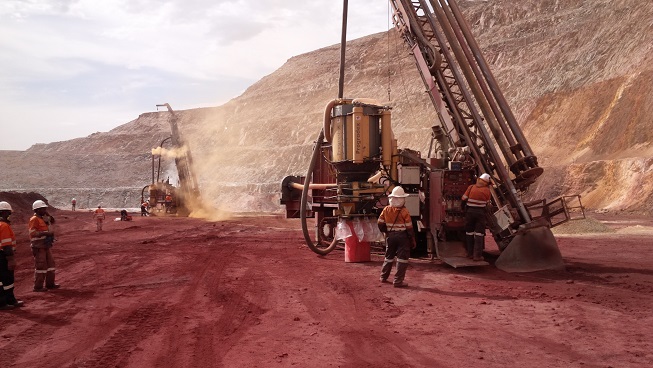
The system recently arrived on site at the Bisha Mine in Eritrea, North East Africa where it will be mounted to a Schramm 450GT Rig for RC Grade Control, similar to the rig/sampler arrangement pictured below.

Bisha Mining is an Eritrean company formed for the development and operation of the Bisha Mine in Western Eritrea. It is owned by Nevsun Resources Ltd. (60%) and the Eritrean National Mining Corporation (ENAMCO) (40%).
The Bisha Mine is a high-grade copper, gold, silver and zinc mine that commenced production in February 2011. It has received continuous support from the Eritrean government, who granted the Company’s mining license in January 2008 and is the first modern mine in Eritrea.

After two years of low cost gold production, the Bisha Mine transitioned to low-cost, high-grade copper production in 2013. Starting in 2016, Bisha will also produce zinc concentrate. Over the remaining life of the mine Bisha is forecast to produce over 640 million pounds of copper and over 1.7 billion pounds of zinc. Further resource potential exists at depth and from nearby discoveries within the Company’s licensed areas.
Progradex was chosen for RC Grade Control at Bisha after a third party audit reported deficiencies in mine to mill reconciliation and attributed the cause to inefficiencies in the current RC Sampling System being used in the pit producing unrepresentative samples.
Specifically, Bisha Mining justification for the change to Progradex was made on the basis of:-
Safety & Health
The Progradex system isolates dust and water exposure to the operators and requires less manual handling than the current practice of collecting the sample and manual splitting.
Improved Productivity
The Progradex system will reduce the number of operators required and allow deployment to enhance the ore spotting and recording/auditing functions in the mine.
The inbuilt automation will remove any source of human error involved in sample mix-ups and will deliver a consistent secondary split product every time from the primary sample.
Improved Economics
The implementation of this system will improve our downstream forecasting (particularly mine to mill) and provide higher confidence in final product characteristics leading to increased returns and reputation from greater consistency of final concentrate.
The system will enhance the recovery of precious metals within the grade control process through collection of fines.
Commissioning of the Progradex PGX1350R Sampling System will take place at the end of April/beginning of May 2015.
World Conference on Sampling & Blending 7

Progradex Managing Director, Toby Day, will be attending the 7th World Conference on Sampling & Blending (WCSB7) in Bordeaux, France on 10-12 June 2015.

The first World Conference on Sampling and Blending (WCSB1) was held in honour of Dr Pierre Gy in Esbjerg, Denmark in August 2003. Since then, the biannual conferences have been hosted in Australia, Brazil, South Africa, Chile and Peru.
The 7th edition this year will be held in Bordeaux, France on 10-12 June 2015, the country where Dr Pierre Gy originally began developing his Theory of Sampling in the 1950’s.
Click here to be taken to the official WCSB7 registration website.
Progradex Sampler Demonstrates Zero Bias

See how Q-Q Plots generated from Progradex Sampler duplicate sample data compares to other drill sampling devices.
Q-Q Plot weight variation from 4 x 100m holes taking duplicate samples at 1m intervals from a Progradex PGX1350T Sampling System in severely broken ground. Note: Not only are the results excellent, they include the fines that no other sampling system can collect and sample.

Below are the Q-Q Plots taken from a Cone Splitter and 4 Tier Riffle Splitter as detailed in “Sampling 2010” Technical Paper (Graindorge 2010). Note: Fines are not included in these samples. Only the Progradex Sampler is capable of 100% recovery for sampling, i.e. collecting and sampling the entire drill hole.

Sampling 2014 Conference

Following on from the very successful Sampling 2012 Conference, Progradex’s Toby Day has again been asked by the AusIMM to present another Keynote Speech at this year’s Sampling 2014 Conference in Perth 29-30th July 2014.
Mining Major Chooses Progradex

Diversified mining giant, Anglo American, has placed an order on Progradex for a PGX1350T Trailer Mounted Sampler and a rig mounted TD1200 Dust Collector for total rig dust emission control at Kumba Iron Ore’s flagship Sishen Mine in the Northern Cape of South Africa.
With a selection process that included a site visit to Barrick’s Pueblo Viejo gold mine in the Dominican Republic to see the results of a Progradex Sampler in operation, the order from Anglo American marks a first for them, a first for the iron ore industry and a first for Africa.
Progradex Managing Director, Toby Day, commented, “This is a significant step for Progradex. To be in partnership with another major mining company is reason enough to be excited about this project but as it is also the first order for the Progradex Sampling System in Africa and in iron ore, we are very pleased. Africa has traditionally been the continent with the highest level of sales activity for the various sampling systems I have been involved with over the years and our strategy to open a UK office was in part to support this region going forward with the complimentary timezone that Africa shares with the UK.”

It is widely understood that iron itself is generally in abundance within an iron ore deposit but the role of sampling at the drilling stage is less understood. Correct drill sampling is critical to identify, not only the purity of iron within the ore but, the impurities that often exist within iron ore. These impurities (alumina, silica, phosporus, etc) are in small percentage but have a highly damaging effect in steel making and, as such, need to be identified.
“This makes representative sampling of iron ore as critical at the drilling stage as it is in, say, gold. As we are trying to find tiny traces of gold in an ore-block, we are doing exactly the same thing in iron ore, except it is alimina or silica or whatever”, Day explains. “There is an argument to say that it is more critical in iron ore simply because of the scale of iron ore operations. Moving dirt does not make money, only moving the right dirt does and, considering the massive volumes mined in iron ore operations, incorrect sampling can directly account for equally massive missed opportunity – processing of waste material and dumping of saleable grade ore on waste piles – and, on this scale, will have a devestating impact on efficiency and, ultimately, profit.”

Anglo American has chosen a PGX1350T trailer mounted system at this stage because it provides them with the flexibility to share the sampler between various rigs, be it for RC grade control or RC exploration activities within the Sishen operations, until it is a proven asset that can be rolled out across other RC drilling programmes as standard rig mounted equipment.
Updates on the progress of the system at Sishen will follow on the Progradex website www.progradex.com